When the Nervous System Is Irritated, Symptoms Travel
Headaches are common.
Nerve pain is common.
But “common” does not mean normal.
Many head, face, neck, and arm symptoms originate from mechanical irritation in the cervical spine. When upper spinal joints lose normal motion, the surrounding muscles tighten, nerves become sensitized, and pain patterns begin to travel.
Sometimes it shows up as a headache.
Sometimes it shows up as tingling in the arm.
Sometimes it feels like pressure behind the eyes.
This section is your hub for understanding those patterns.
What We’re Actually Looking For
We don’t chase pain.
We evaluate mechanical cause.
In this region we assess:
- Upper cervical motion (C0–C2)
- Mid and lower cervical loading patterns
- Postural stress (desk work, driving, devices)
- Nerve distribution patterns
- Prior trauma (even “minor” auto accidents)
When joints stop moving correctly, nerves do not function calmly. That irritation can radiate or refer.
Restore motion → reduce irritation → stabilize the system.
That’s the model.
Headache & Nerve Conditions We Address
Click through each page for a deeper explanation and treatment approach.
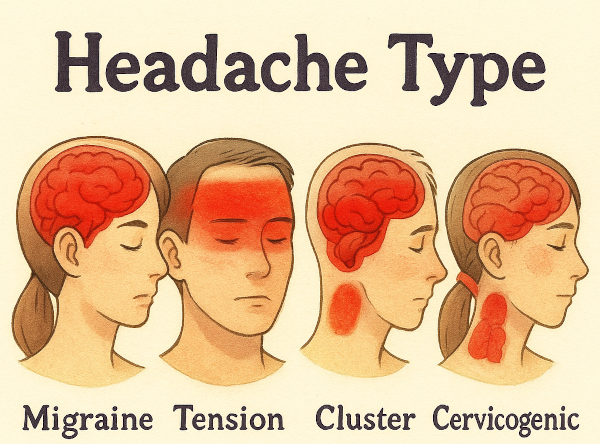
Cervicogenic Headaches
Head pain originating from the neck itself.
Often one-sided, starting at the base of the skull and wrapping forward.
Tension-Type Headaches
Band-like pressure across the forehead or temples.
Frequently related to posture and sustained muscular contraction.
Migraines (Mechanical Contributors)
Not all migraines are purely vascular or hormonal.
Cervical restriction can act as a trigger amplifier.
Occipital Neuralgia
Sharp, electric pain radiating from the base of the skull upward due to occipital nerve irritation.
Post-Traumatic / Whiplash Headaches
Delayed-onset headaches after car accidents or impact injuries.
Imaging may appear “normal” while mechanics are not.

Cervical Radiculopathy
Arm pain, numbness, tingling, or burning caused by nerve root irritation in the neck.
Peripheral Nerve Irritation
Nerve-related symptoms without full disc involvement — often mechanical and posture-driven.
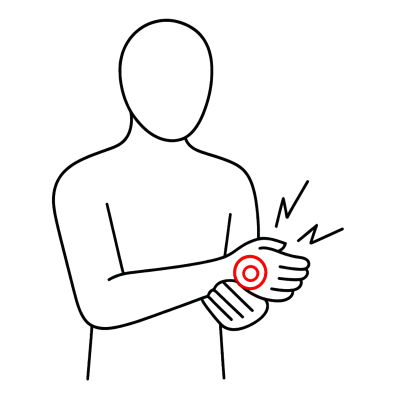
Carpal Tunnel Syndrome
Compression of the median nerve at the wrist causing numbness, tingling, and weakness in the hand.
Why This Matters
Pain medication can reduce symptoms temporarily.
It does not:
- Restore joint motion
- Normalize mechanical stress
- Remove the underlying irritation
If the mechanics remain faulty, the pattern repeats.
The goal is not short-term relief.
The goal is restoring balance so the nervous system can calm down.
When You Should Consider an Evaluation
- Recurring headaches
- Headaches that start in the neck
- Head pain after a car accident
- Tingling or numbness in the arm
- Persistent pressure behind the eyes
- Shoulder blade burning that won’t go away
These are mechanical clues.
Ignoring them allows compensation to deepen.
If your symptoms are part of this pattern, the next step isn’t guessing.
It’s evaluation.